
Duct sealing addresses air leakage in your HVAC ductwork—the metal or flex ducts that distribute heated and cooled air throughout your home. When ducts are poorly sealed or develop gaps, conditioned air escapes into unconditioned spaces like attics, basements, or crawlspaces before reaching your living areas.
You may have duct leakage if certain rooms are consistently too hot or too cold, your energy bills are higher than expected despite a newer HVAC system, you notice excessive dust near vents, or your system runs constantly but struggles to maintain comfortable temperatures. These signs often indicate your system is compensating for air leakage instead of operating efficiently.
In DE, PA, and NJ homes with ductwork in unconditioned attics or basements, leakage typically accounts for 20–30% of total heating and cooling energy loss. Leaky ducts create pressure imbalances that draw unconditioned air into the home while expelling the air you paid to heat or cool. This results in longer HVAC run times, increased equipment wear, and higher monthly utility costs.
Leakage can also reduce indoor air quality by pulling dust, insulation fibers, and allergens from attic or basement spaces into living areas.
Every project begins with a duct blaster test—the industry standard for measuring duct system airtightness. The equipment pressurizes your duct system and measures total air leakage in CFM25 (cubic feet per minute at 25 Pascals). A typical 1,800-square-foot New Castle County home shows 150–200 CFM25 before sealing. DOE guidelines recommend keeping leakage below 50 CFM25 for optimal efficiency.
After measuring total leakage, we identify where air loss is occurring. Common problem areas in Delaware homes include return plenum connections in basements, poorly sealed flex duct joints in attics, disconnected register boots, and gaps around air handler connections. We use visual inspection and thermal imaging, when available, to locate leaks and prioritize the areas that will deliver the greatest improvement.
Once leak locations are confirmed, we seal accessible ductwork using mastic sealant and metal-backed HVAC-rated tape. We focus on high-impact areas such as return-side leaks, supply plenum connections, and accessible attic or basement joints—areas that commonly account for system inefficiency. All sealing methods meet DOE standards for durability and long-term performance.
After sealing is complete, we perform a second duct blaster test to verify measurable improvement. This post-sealing test confirms the reduction in total air leakage and documents performance gains. Most properly sealed systems in our service area achieve final leakage rates between 30–50 CFM25, meeting DOE efficiency guidelines.
Energy Services Group holds DOE “Efficient New Home” Partner ID 2782/866 and operates as a DOE Certified Verifier. We are qualified to test and verify duct systems to federal energy efficiency standards—not simply seal them and move on.
Our credentials ensure your project meets documented performance benchmarks backed by measured data.
We test before recommending improvements. If your duct blaster results show minimal leakage, we’ll tell you duct sealing isn’t a priority and suggest more cost-effective options. If testing reveals significant leakage, we’ll review the data and explain expected ROI.
This approach eliminates guesswork and avoids high-pressure sales tactics common in the HVAC industry.
Duct sealing often delivers the best results when combined with broader weatherization improvements. As specialists in comprehensive home energy audits, we determine whether air sealing, insulation upgrades, or HVAC improvements should take priority for your specific home.
Many duct sealing projects stem from findings during whole-home energy assessments, where duct testing is one component of a complete building performance evaluation.
Duct sealing typically offers strong ROI when ductwork runs through unconditioned spaces (attics, vented crawlspaces, unfinished basements), when you experience comfort issues like hot or cold rooms, or when duct blaster results exceed 100 CFM25.
It’s also worth considering if energy bills are high despite a relatively new HVAC system, or if you’re planning other efficiency upgrades where duct sealing can amplify overall benefits.
If your home lacks sufficient attic insulation or has significant air leakage through the building envelope, those upgrades often provide greater savings than duct sealing alone. Likewise, if ductwork is fully within conditioned space (inside the thermal envelope), leakage has less impact on energy costs.
We recommend improvements in the order that delivers the best financial return for your situation.
For homes with significant leakage in unconditioned spaces, professional duct sealing typically pays for itself within 3–7 years through reduced heating and cooling costs. The timeline depends on your leakage rate, local energy prices, and HVAC usage.
The diagnostic duct blaster test allows us to estimate savings specific to your home before you commit.
Most residential projects take 4–6 hours, depending on home size and duct accessibility. Duct blaster testing adds approximately 1–2 hours for pre- and post-sealing measurements.
Homeowners can seal accessible joints, but verified performance requires diagnostic equipment and building science knowledge. DIY sealing without testing often misses major leaks and provides no measurable proof of improvement.
Most work occurs in attics, basements, or crawlspaces. We protect finished areas, and mastic sealant and professional tape are applied directly to duct surfaces only.
No. Duct sealing addresses air leakage, not debris inside ducts. These are separate services. We can discuss whether duct cleaning is appropriate during your assessment.
Some Delaware utility programs include duct sealing as eligible weatherization work. We can help determine whether your project qualifies for available incentives.
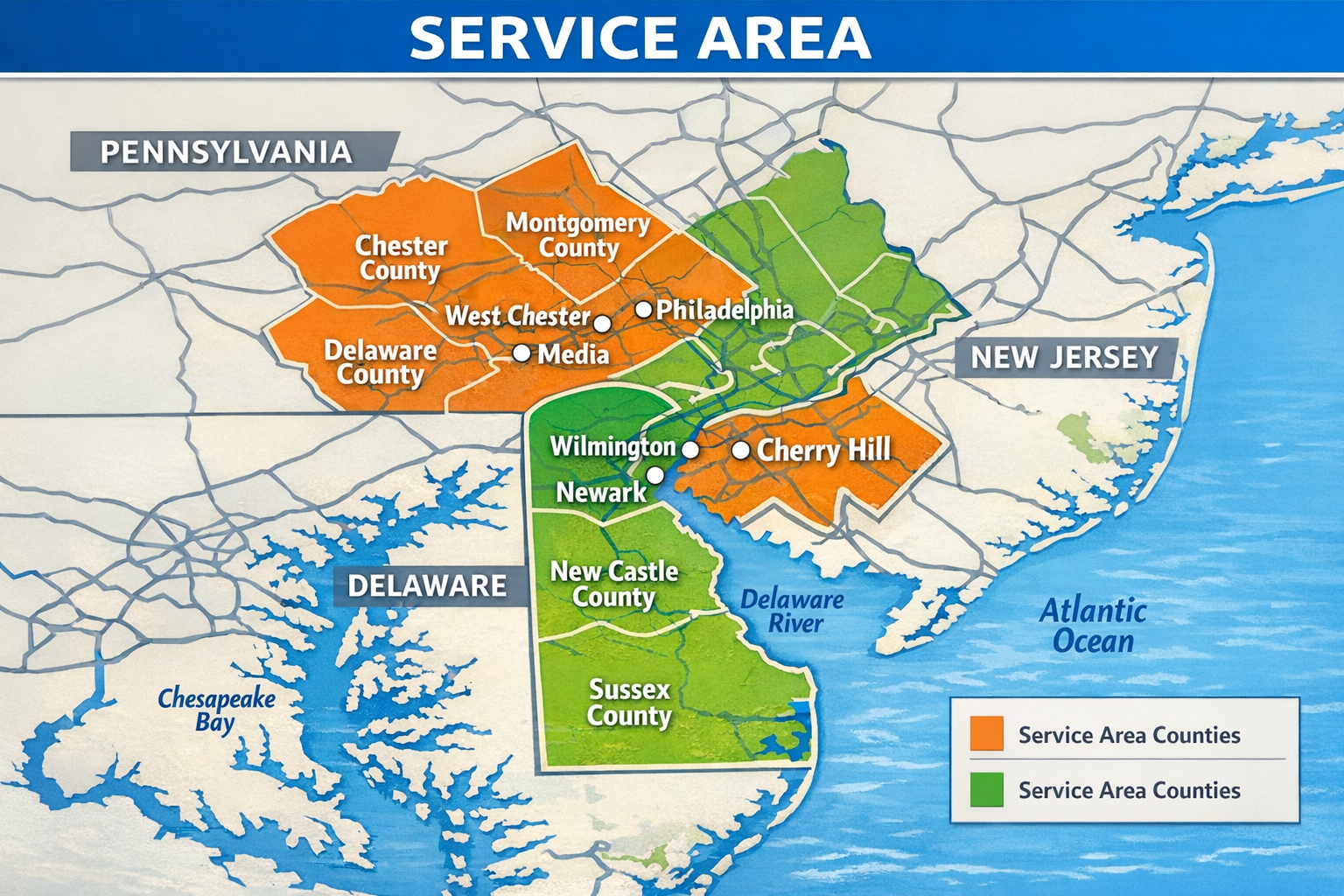
Based in New Castle, Delaware, we serve homeowners and builders throughout:
Including Wilmington, Newark, Dover, West Chester, Media, and Cherry Hill.
Most projects can be scheduled within one to two weeks, depending on location and scope.